
Beyond the Bass Drop: 5 Surprising Truths About Tomorrowland You Probably Didn’t Know
 traveltofestivals@gmail.com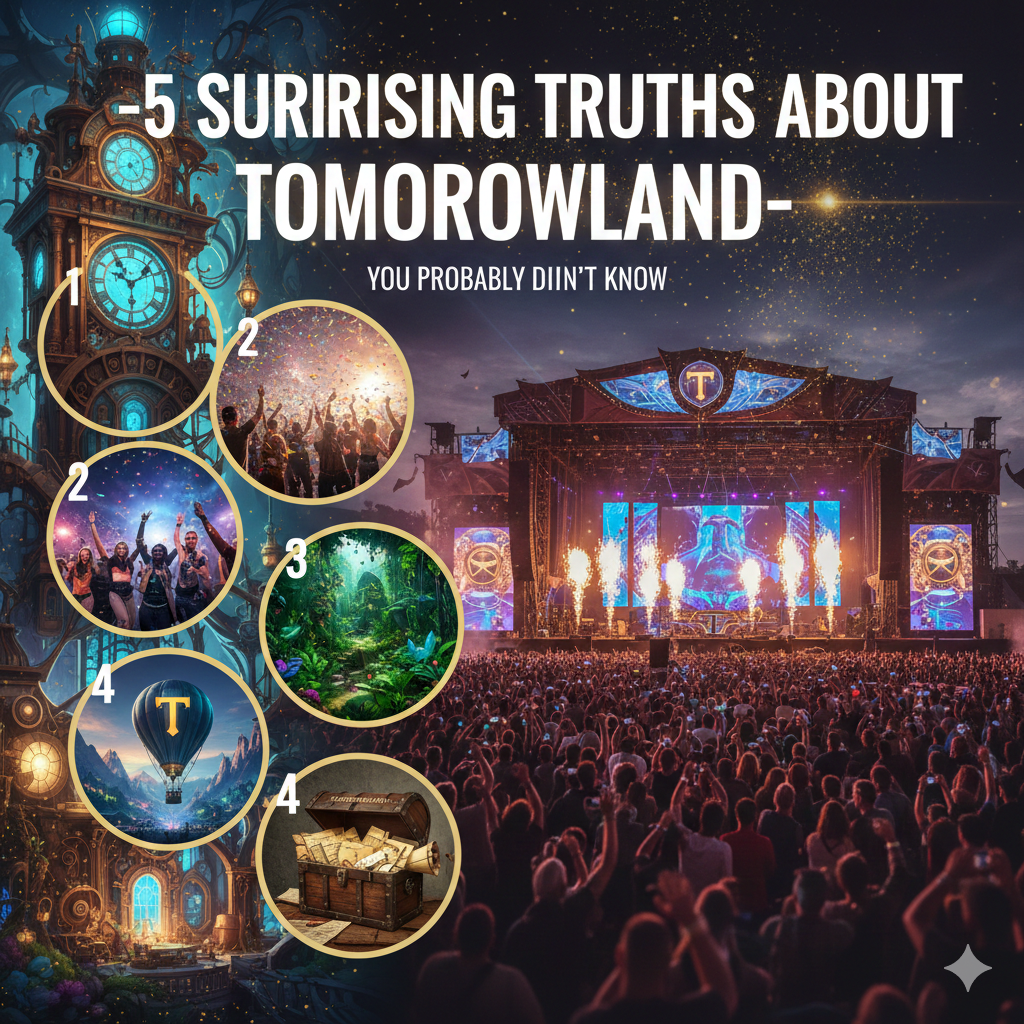
When you picture Tomorrowland, you likely imagine the iconic images broadcast around the globe: colossal, fairy-tale stages, spectacular firework displays lighting up the night sky, and a sea of people from every corner of the world united by music. But behind this incredible spectacle lies a complex and fascinating world of surprising logistics, economic power, and core values that most attendees never see. This is a look into five of the most impactful and unexpected facts that define the world’s most famous music festival.
1. The “First 20” Rule: A Little-Known Hack for Securing Tickets
Getting tickets to Tomorrowland is famously difficult, with fan communities estimating a success rate as low as 5% in the frantic Worldwide Ticket Sale. While most fans know about the mandatory “Pre-Registration” step—which only grants access to the sale, not a guarantee of tickets—few are aware of a crucial built-in advantage for the quickest and most dedicated.
This is the “First 20” rule. The first 20 people from each country to pre-register through their Tomorrowland Account receive a special, dedicated link to buy their passes before the main Worldwide Sale even begins. This link allows them to purchase up to four passes or packages, effectively bypassing the digital queue that defeats hundreds of thousands of others. Eligibility isn’t based on nationality, but on the country of residence listed in your official Tomorrowland Account. This mechanic transforms the ticket-buying process from a game of pure luck into a race against the clock, rewarding the most organized and informed fans with an almost-guaranteed entry to the festival.
2. It’s Not Just a Festival, It’s a Major Economic Engine
While Tomorrowland is a cultural phenomenon, it’s also a powerhouse for the Belgian economy. The festival’s financial impact goes far beyond ticket sales, reframing it from a simple two-weekend party into a vital contributor to the national and local economy. Beyond the national figures, the tourism sector flourishes thanks to the many festival-goers who stay overnight in Brussels and the surrounding area of Boom, such as Antwerp and Mechelen.
The numbers are staggering:
• The two festival weekends generate nearly 281 million EUR in increased economic activity for Belgium.
• This activity supports an increase equivalent to 1,900 full-time jobs.
• The direct financial return to the government through taxes and contributions amounts to 75.9 million EUR.
• During the event itself, a massive team of 15,000 people are employed for the festival’s total organization.
These figures show that Tomorrowland is a major industry, driving tourism, creating employment, and significantly boosting public funds.
3. The Campsite is a Pop-Up City with a Supermarket and Tattoo Parlor
To call DreamVille a “campsite” is a massive understatement. For the duration of the festival, it becomes a meticulously designed temporary city built to serve its tens of thousands of residents. The level of infrastructure and available amenities is counter-intuitive to the typical festival camping experience of roughing it in a field.
A look at the official floorplan reveals a startling range of services designed to provide for nearly every practical need and even some unexpected luxuries. Among the standard food stalls and shower blocks, residents can find:
• A full-service SUPERMARKET BY CARREFOUR
• A HAIR SALON and a TATTOO SHOP
• A dedicated LOOP EARPLUGS store
• A BALANCE AREA for wellness and recovery
• A fresh BAKERY and a COLD BEER PICK UP service
• PHONE REPAIR services and fashion boutiques
This pop-up city demonstrates an incredible focus on visitor experience, ensuring that attendees can live comfortably and conveniently for the entire festival weekend.
4. Its Commitment to Sustainability and Charity Goes Deeper Than You Think
Far from being a recent corporate trend, a commitment to social and environmental responsibility has been a core part of Tomorrowland’s identity for over a decade. Since 2013, the “Love Tomorrow” platform has guided these efforts under the tagline “live today, love tomorrow and unite forever.”
Their initiatives are not just for show; they are substantive and impactful. For example, Tomorrowland has a goal to reduce its carbon emissions by 50%. A key part of this is incorporating Sustainable Aviation Fuel (SAF) into its Global Journey flight packages. Their 20% SAF blend is a significant commitment, especially when compared to the wider travel industry’s goal of just 2% SAF by 2025.
Beyond environmental action, the Tomorrowland Foundation works to build Music & Arts Schools for vulnerable children in communities around the world, with established locations in Nepal, India, and Brazil. This work is guided by a unique philosophy that expands on the traditional pillars of sustainability:
…in addition to people – prosperity – planet – purpose and partnership, the ambition is to bring pleasure, too.
This deep-rooted sense of responsibility demonstrates a level of genuine corporate citizenship that is surprising and rare for a large-scale entertainment event.
5. You Can Buy a “Surprise Package” and Have No Idea What You’re Getting
Among the many travel options available through Global Journey, one stands out as the ultimate leap of faith: the Surprise Package. The concept is simple and audacious: attendees pay a premium for a package where all the key details are kept completely secret. In exchange, Tomorrowland promises an experience filled with “unforgettable surprises.”
While the specifics are hidden, these packages typically include high-end accommodation in the premium “Montagoe” area and exclusive activities like private parties or access to the festival grounds before the general public. However, anecdotal evidence from attendees shows it’s a true gamble. One Reddit user, for example, described their 2023 package as “straight fire – one of the best experiences of my life,” but reported that their 2024 package was a “let down” in comparison. This offering relies on immense brand trust and caters to a specific type of adventurer who values a unique, curated experience over a predictable plan.
Conclusion
From a hidden ticket hack to its role as an economic engine and a leader in sustainability, Tomorrowland is far more than just its stages and its music. These surprising truths reveal a meticulously planned, deeply principled, and complex organization operating just beneath the surface of the party. It leaves one to wonder: what does it truly mean for a festival to create a complete, immersive, and responsible “world” of its own?
About The Author


3 thoughts on “Beyond the Bass Drop: 5 Surprising Truths About Tomorrowland You Probably Didn’t Know”
Comments are closed.